


How to Choose the Right Food Waste Treatment Equipment: Integrated Machine or Processing Line?
With the rapid growth of urbanization and stricter environmental regulations, food waste treatment has become a critical issue for restaurants, commercial complexes, institutions, and municipal authorities. Selecting the right food waste treatment equipment is essential to ensure efficient operation, regulatory compliance, and long-term cost control.
Among the most common solutions on the market, integrated food waste treatment machines and distributed food waste processing lines are widely used. However, their applications, capacities, and investment requirements differ significantly. This article provides a practical guide to help you choose the most suitable food waste treatment solution for your project.
What Is an Integrated Food Waste Treatment Machine?
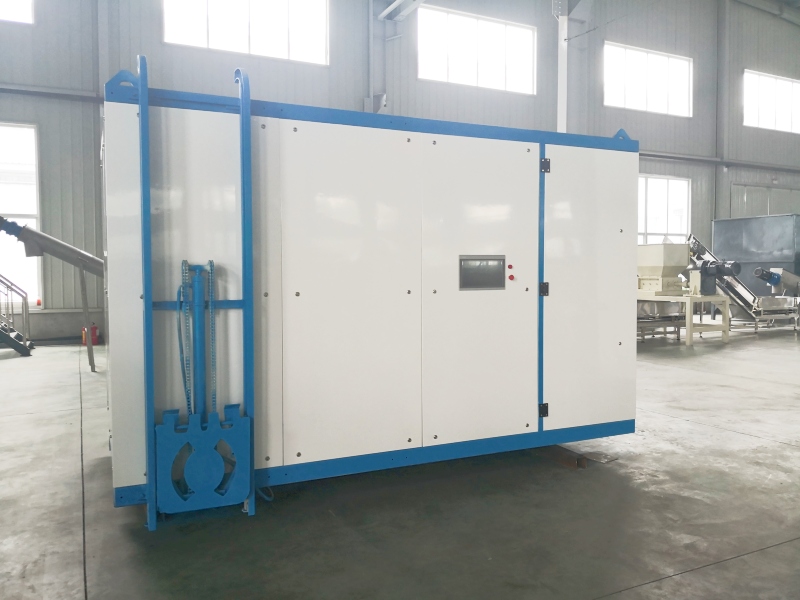
An integrated food waste treatment machine is a compact system that combines feeding, shredding, mixing, dehydration, and biological or thermal treatment into a single unit. It is designed for on-site food waste reduction and simplified operation.
Key Features
Compact structure and small footprint
High level of automation
Easy installation and operation
Short project implementation cycle
Lower initial investment
Typical Applications
Restaurants and commercial kitchens
Hospitals and schools
Office buildings and residential communities
Small-scale food waste treatment projects
Integrated machines are ideal when food waste is generated at multiple decentralized points or when space and operational manpower are limited.
What Is a Distributed Food Waste Processing Line?
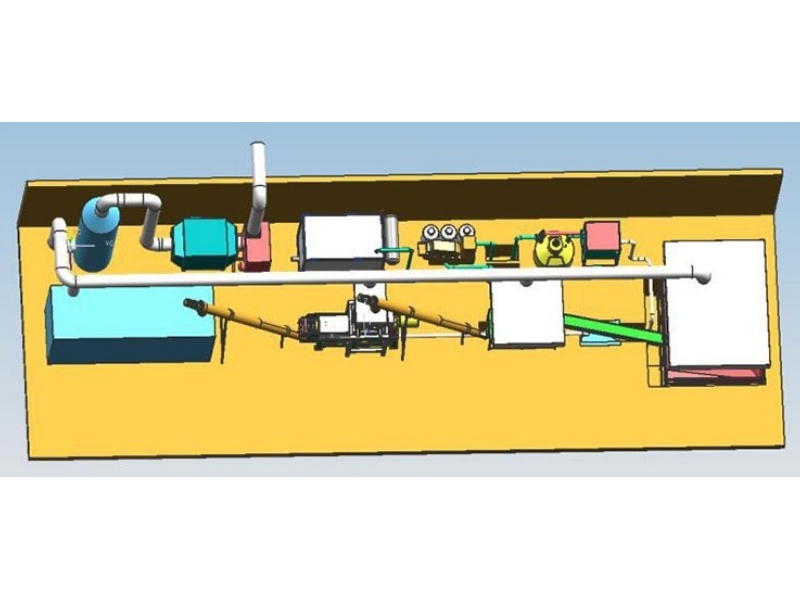
A distributed food waste processing line consists of multiple modular systems arranged in sequence to form a complete food waste treatment plant. The configuration can be customized according to material characteristics and processing objectives.
Common System Modules
Pre-treatment (bag breaking, sorting, shredding)
Dewatering and oil-water separation
Anaerobic digestion or composting systems
Odor control and wastewater treatment systems
Key Features
Large processing capacity
High operational stability
Flexible process design
Easy integration with resource recovery systems
Strong scalability for future expansion
Distributed processing lines are commonly used in centralized food waste treatment facilities and large-scale projects.
Key Factors for Choosing Food Waste Treatment Equipment
1. Daily Processing Capacity
Processing capacity is the most important selection criterion.
Below 1 ton/day: Integrated food waste treatment machines are usually sufficient
1–5 tons/day: Either multiple integrated machines or a small processing line may be suitable
Above 5 tons/day: Distributed food waste processing lines are recommended
2. Waste Generation Pattern
Decentralized sources (multiple kitchens or buildings): Integrated machines allow on-site treatment and reduce transportation costs
Centralized sources (industrial kitchens, food courts): Processing lines offer better efficiency and cost control
3. Site Conditions and Layout
Limited space or indoor installation requirements favor integrated food waste treatment machines
Projects with sufficient land and clear zoning benefit from modular processing lines
4. Investment and Operating Costs
Integrated machines:
Lower capital investment
Simple maintenance and minimal labor
Processing lines:
Higher initial investment
Lower unit treatment cost at scale
Potential revenue from biogas or organic fertilizer
5. Resource Recovery and Environmental Requirements
If the goal is basic waste reduction and compliance, integrated machines are often sufficient.
For projects targeting biogas production, composting, or advanced resource recovery, distributed food waste treatment systems provide greater technical flexibility.
Recommended Solutions for Typical Applications
| Application Scenario | Recommended Solution |
|---|---|
| Restaurants & small kitchens | Integrated food waste treatment machine |
| Schools & hospitals | Integrated machine or small processing line |
| Commercial complexes | Distributed food waste processing line |
| Municipal treatment centers | Distributed processing line |
Integrated Machine vs Processing Line: Which Is Right for You?
There is no universally superior solution. The right choice depends on:
Daily and peak food waste volume
Available installation space
Budget and long-term operating strategy
Environmental compliance requirements
Resource recovery objectives
A well-designed food waste treatment system should balance technical reliability, economic efficiency, and sustainability.
Conclusion
Choosing the right food waste treatment equipment is a strategic decision that directly affects operational efficiency and environmental performance.
For small-scale, decentralized, and fast-deployment projects, integrated food waste treatment machines offer simplicity and cost advantages.
For large-scale, centralized, and resource-oriented projects, distributed food waste processing lines deliver long-term value and scalability.
By carefully evaluating project conditions and treatment goals, you can implement a food waste treatment solution that meets both regulatory and commercial expectations.
If your company wants to establish a business relationship with us, please briefly describe the cooperation intention and send an email to:chuantaiscrewpress@gmail.com
![[list:title]](/static/upload/image/20240528/1716877114510915.jpg)