


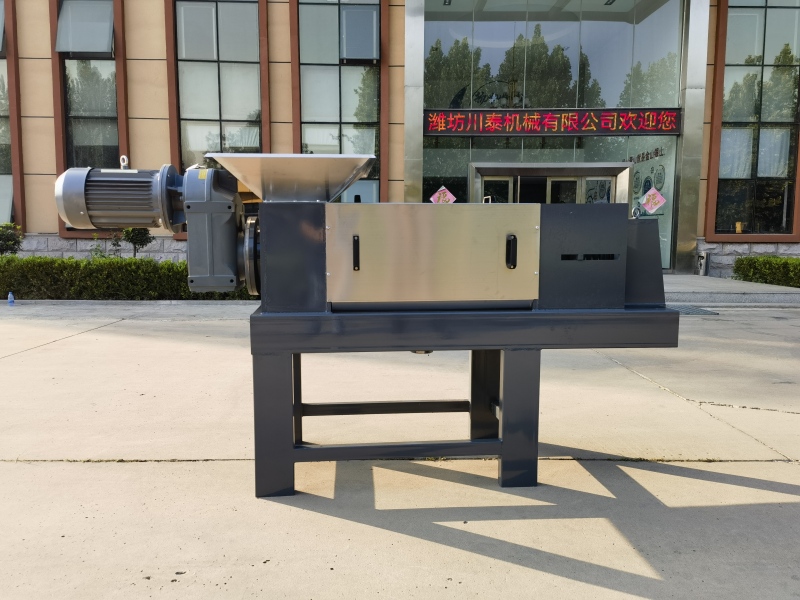
The agricultural industry generates a substantial amount of sweet potato waste during processing, presenting a challenge for sustainable waste management. To address this issue, the development of a Sweet Potato Waste Dewatering Machine has gained prominence in recent years. This article explores the evolution of such machines, highlighting their significance in reducing environmental impact and promoting resource efficiency.
Introduction:
Sweet potato processing plants produce large quantities of waste, including peels, stems, and residues. Efficient management of this waste is crucial to minimize environmental impact and utilize the by-products effectively. The development of Sweet Potato Waste Dewatering Machines plays a vital role in achieving these goals.
Early Innovations:
The initial phase of sweet potato waste management involved basic methods such as manual sorting and disposal. However, as the scale of sweet potato processing increased, innovative solutions became imperative. Early dewatering machines emerged to separate moisture from the waste, facilitating easier handling and disposal.
Mechanical Dewatering Advancements:
With advancements in technology, mechanical dewatering machines were introduced to improve efficiency. These machines utilize centrifugal force, screw press technology, or belt presses to extract moisture from sweet potato waste. The development of such machines not only streamlined the waste management process but also contributed to the generation of valuable by-products.
Integration of Sustainability:
Modern Sweet Potato Waste Dewatering Machines are designed with a focus on sustainability. The integration of energy-efficient mechanisms and eco-friendly materials enhances the overall environmental performance of these machines. Some models incorporate innovative approaches, such as utilizing the extracted moisture for irrigation or bioenergy production.
Automated Systems and Smart Technology:
Recent developments in automation and smart technology have further revolutionized sweet potato waste dewatering. Automated systems enable precise control over the dewatering process, optimizing resource utilization and reducing operational costs. Additionally, smart sensors and data analytics enhance the efficiency and reliability of these machines.
Potential Applications of Dewatered Waste:
The dewatered sweet potato waste obtained from these machines has various potential applications. It can be used as animal feed, organic fertilizer, or even as a raw material for biogas production. The versatility of the by-products contributes to the overall sustainability of the sweet potato processing industry.
Future Prospects:
The future of Sweet Potato Waste Dewatering Machines holds promising prospects. Ongoing research focuses on further improving efficiency, reducing energy consumption, and exploring novel applications for the dewatered waste. Collaborations between academia, industry, and policymakers are essential to drive innovation and implement sustainable waste management practices.
Conclusion:
The development of Sweet Potato Waste Dewatering Machines signifies a significant step towards sustainable agriculture and waste management. These machines not only contribute to environmental conservation but also unlock the potential for creating value-added products from sweet potato waste. Continued research and technological advancements in this field are crucial for shaping a more sustainable and resource-efficient future in sweet potato processing.
If your company wants to establish a business relationship with us, please briefly describe the cooperation intention and send an email to:chuantaiscrewpress@gmail.com
![[list:title]](/static/upload/image/20240528/1716877114510915.jpg)