


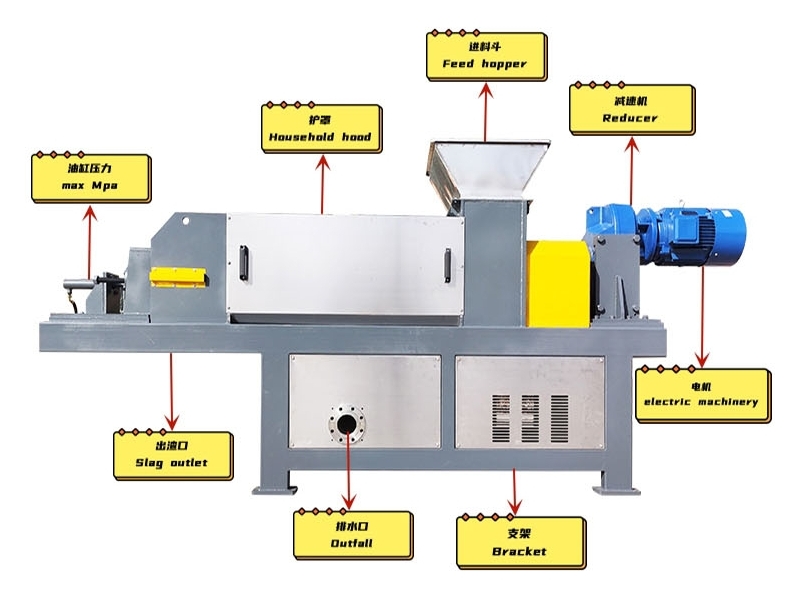
Waste food dewatering machines play a crucial role in addressing the global challenge of food waste by efficiently removing excess moisture from discarded food items. This technology has garnered increasing attention due to its potential to not only reduce the volume of waste but also contribute to environmental sustainability. This article explores the current state of waste food dewatering machines and examines their development prospects in the foreseeable future.
Current Scenario:
The issue of food waste has gained prominence as a significant environmental and social concern. Inefficient management of food waste not only leads to the squandering of valuable resources but also contributes to greenhouse gas emissions. Waste food dewatering machines have emerged as a practical solution to mitigate these problems by extracting water content from food waste, thereby reducing its overall volume.
Key Features and Advantages:
Waste food dewatering machines employ advanced technologies such as centrifugation, compression, or press methods to separate water from organic waste. These machines offer several advantages, including increased efficiency in waste management, reduced transportation costs due to decreased waste volume, and the production of valuable by-products such as organic slurry or biofuels. Additionally, the dewatered food waste becomes more amenable to composting and anaerobic digestion, further contributing to sustainable waste disposal practices.
Market Trends and Growth Factors:
The market for waste food dewatering machines is witnessing a steady increase, driven by a growing awareness of the environmental impact of food waste and stringent waste management regulations. Industries, commercial establishments, and municipalities are increasingly adopting these machines to enhance their waste reduction initiatives. Moreover, technological advancements, such as the integration of smart sensors and automation, are improving the efficiency and usability of these machines, further fueling market growth.
Environmental and Economic Benefits:
One of the primary reasons for the positive outlook on waste food dewatering machines is their ability to deliver both environmental and economic benefits. By reducing the volume of food waste and facilitating the extraction of valuable resources, these machines contribute to sustainable waste management practices. Additionally, businesses and municipalities can experience cost savings through reduced waste disposal expenses and the potential monetization of by-products generated during the dewatering process.
Challenges and Future Innovations:
Despite the promising outlook, waste food dewatering machines face challenges such as high initial costs and the need for proper maintenance. Future innovations may focus on addressing these challenges by developing more cost-effective and user-friendly machines. Research and development efforts may also explore novel techniques for extracting additional value from dewatered food waste, such as the production of high-value biochemicals or fertilizers.
Conclusion:
Waste food dewatering machines represent a pivotal technology in the pursuit of sustainable waste management practices. As awareness of the environmental impact of food waste continues to grow, the market for these machines is expected to expand. With ongoing technological advancements and innovations, waste food dewatering machines are poised to play a crucial role in shaping a more sustainable and efficient approach to handling food waste on a global scale.
If your company wants to establish a business relationship with us, please briefly describe the cooperation intention and send an email to:chuantaiscrewpress@gmail.com
![[list:title]](/static/upload/image/20240528/1716877114510915.jpg)